
Are Pesticides Safe for Pets and Kids? What Bend Homeowners Should Know
Are pesticides safe for pets and kids? It’s the first question many Bend homeowners ask us — and it should be. You want the ants gone, but not at the cost of your toddler’s health or your dog’s safety. Here’s the honest, no-spin answer from licensed technicians who apply these products every day: modern professional pest control is designed around family safety, and the precautions are straightforward. This guide explains how pesticide safety in Bend, Oregon actually works.
The Honest Answer: It’s About Dose, Placement, and Product Choice
The word “pesticide” covers an enormous range of products — from boric acid baits to targeted exterior residuals — and treating them all as equally dangerous is like treating all medicines as equally risky. What matters is which product, where it’s applied, and how much. Professional pest control uses EPA-registered products at label-directed rates, applied in cracks, crevices, wall voids, and exterior perimeters — places your kids and pets don’t lick, touch, or play. The label isn’t a suggestion; it’s federal law, and licensed applicators follow it exactly.
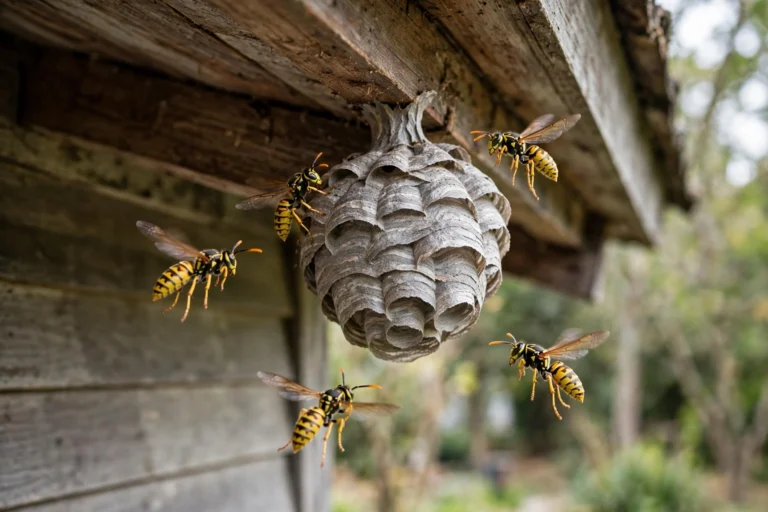
Here’s the comparison most people miss: the uncontrolled alternative is often worse. Rodents spread hantavirus and salmonella. Cockroaches trigger asthma attacks in children — one of the most documented indoor health risks for kids. A severe ant or wasp problem drives homeowners to repeated rounds of store-bought sprays applied without label knowledge, which is genuinely riskier than one professional treatment. Doing nothing isn’t the safe option; doing it right is.
What “IPM” Means for Your Family
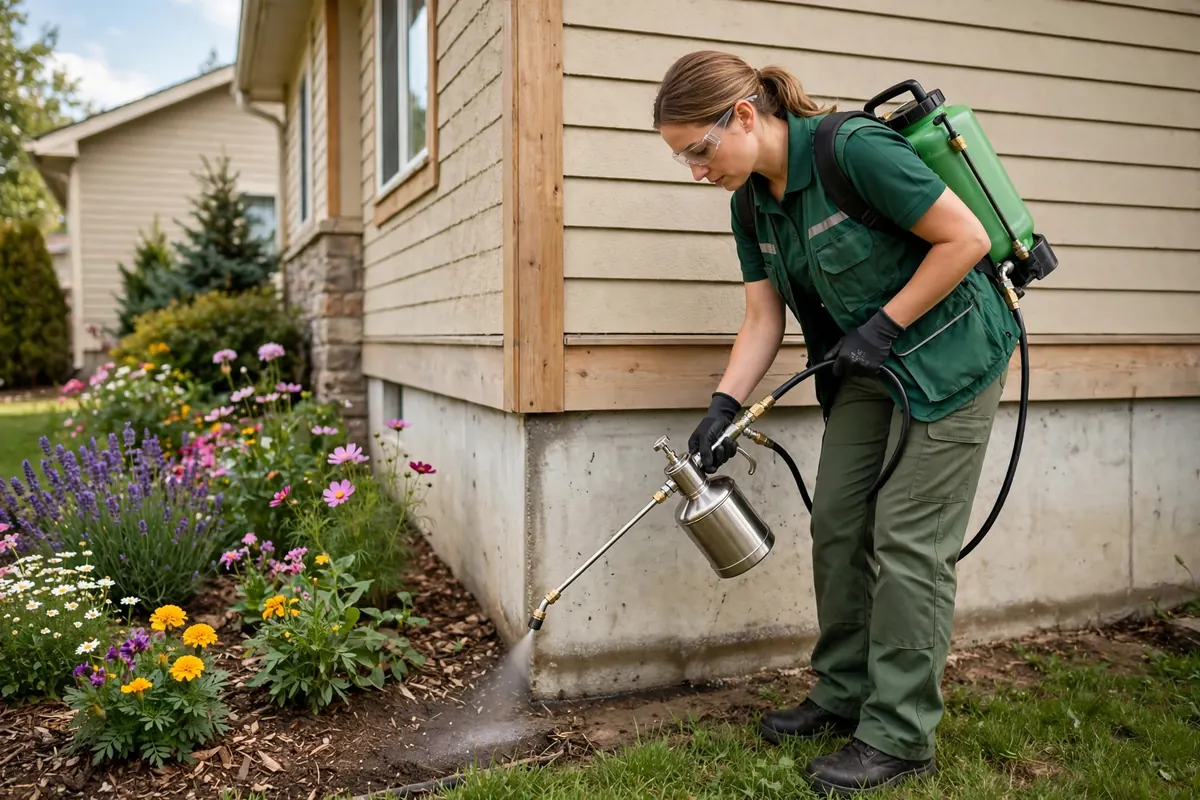
We practice Integrated Pest Management (IPM) — the industry standard that puts chemical treatment last, not first. In practice, that means: we inspect to find the actual source, we seal entry points so pests can’t return, we recommend sanitation and moisture fixes that remove what attracts pests, and only then do we apply targeted products where they’re needed. For many Bend homes, the majority of each quarterly visit is exterior perimeter work — meaning less product inside your living space, not more.
IPM also means choosing the lowest-risk effective option. Baits in tamper-resistant stations instead of broadcast sprays. Targeted dusts in wall voids instead of foggers. Exterior barriers instead of interior saturation. If you’re comparing us to a company that “sprays everything, every time,” that’s the difference IPM makes for your family’s exposure.
Oregon’s Licensing Rules Protect You
In Oregon, anyone applying pesticides commercially must be licensed through the Oregon Department of Agriculture — which requires training, testing, and continuing education. Our technicians carry those licenses, and we’re happy to show them. This matters because licensing isn’t just paperwork: it means the person treating your home actually understands product labels, application rates, buffer zones, and what to do if something goes wrong.
Always ask any pest control company for their ODA license number. If they hesitate, that’s your answer — find someone else. Unlicensed applicators are the source of most pesticide safety horror stories, not the products themselves.
Practical Precautions After a Treatment
- Let exterior treatments dry — typically 1–2 hours — before letting kids and pets into treated areas
- Don’t touch bait stations — they’re tamper-resistant, but teach kids to leave them alone
- Store the service report — it lists exactly what was applied and where, useful for your vet or pediatrician if questions ever arise
- Tell us about special concerns upfront — aquariums, beehives, vegetable gardens, a pet with health issues — so we can plan around them
- Keep pet food and toys picked up before interior visits so we can treat baseboards and entry points properly
Protecting Pollinators and the Deschutes River
Bend homeowners care about the river and the bees — so do we. Our applications avoid flowering plants during bloom, we don’t treat near waterways without proper buffers, and our exterior perimeter approach keeps products on your foundation, not drifting across the yard. If you keep bees or maintain a pollinator garden, tell us: we’ll design the treatment plan around it. Responsible residential pest control protects your home without punishing the ecosystem around it. OSU Extension publishes excellent guidance on pollinator-protective pest management for Oregon homeowners.
Frequently Asked Questions
How long should kids and pets stay away after treatment?
For most exterior treatments: until dry, usually 1–2 hours. For interior treatments, we’ll give you specific guidance based on what was applied — sometimes it’s just keeping pets out of one room until evening. We’ll always tell you exactly, in plain language, before we leave.
Are “organic” or “natural” pest treatments safer?
Not automatically. “Natural” describes the source, not the toxicity — and some natural products require heavier application to work, increasing exposure. What matters is the product’s EPA registration, the dose, and the placement. We’ll discuss low-impact options honestly and tell you where they work well and where they don’t.
My dog eats everything. Is pest control still safe?
Tell us — this is exactly the kind of thing that changes our plan. We can use more bait stations (enclosed and tamper-resistant), focus on exterior barriers, and avoid granular products in areas your dog frequents. A good technician adapts the treatment to the household.
Should I leave during the treatment?
For routine exterior service, no — you don’t even need to be home. For interior treatments, we’ll let you know if it’s better to step out briefly. Most of our quarterly scheduled service is exterior-only by design.
What if my pet has a reaction after treatment?
Contact your veterinarian immediately and call us — your service report lists every product applied, which helps the vet respond fast. True reactions to professional applications at label rates are rare, but we take every report seriously and will re-evaluate your treatment plan.
Questions about safety? We’d rather answer them before the visit than after. Request a free estimate or call High Desert Pest Solutions at (541) 555-0123 — honest answers, licensed technicians, and family-safe pest control in Bend and throughout Tumalo, Sunriver, and Central Oregon.