How to Keep Mice Out of Your Home During a Central Oregon Winter
The nights are getting cold in Central Oregon, and somewhere out there, a deer mouse is sizing up your house. Every fall, as temperatures drop, rodents across the high desert abandon their summer territories and push indoors seeking warmth, food, and nesting sites. If you want to keep mice out of your home this winter, the work starts now — before the first hard freeze. Here’s what a local technician wants every Central Oregon homeowner to know about mice in winter.
Why Fall Is Mouse Season in Central Oregon
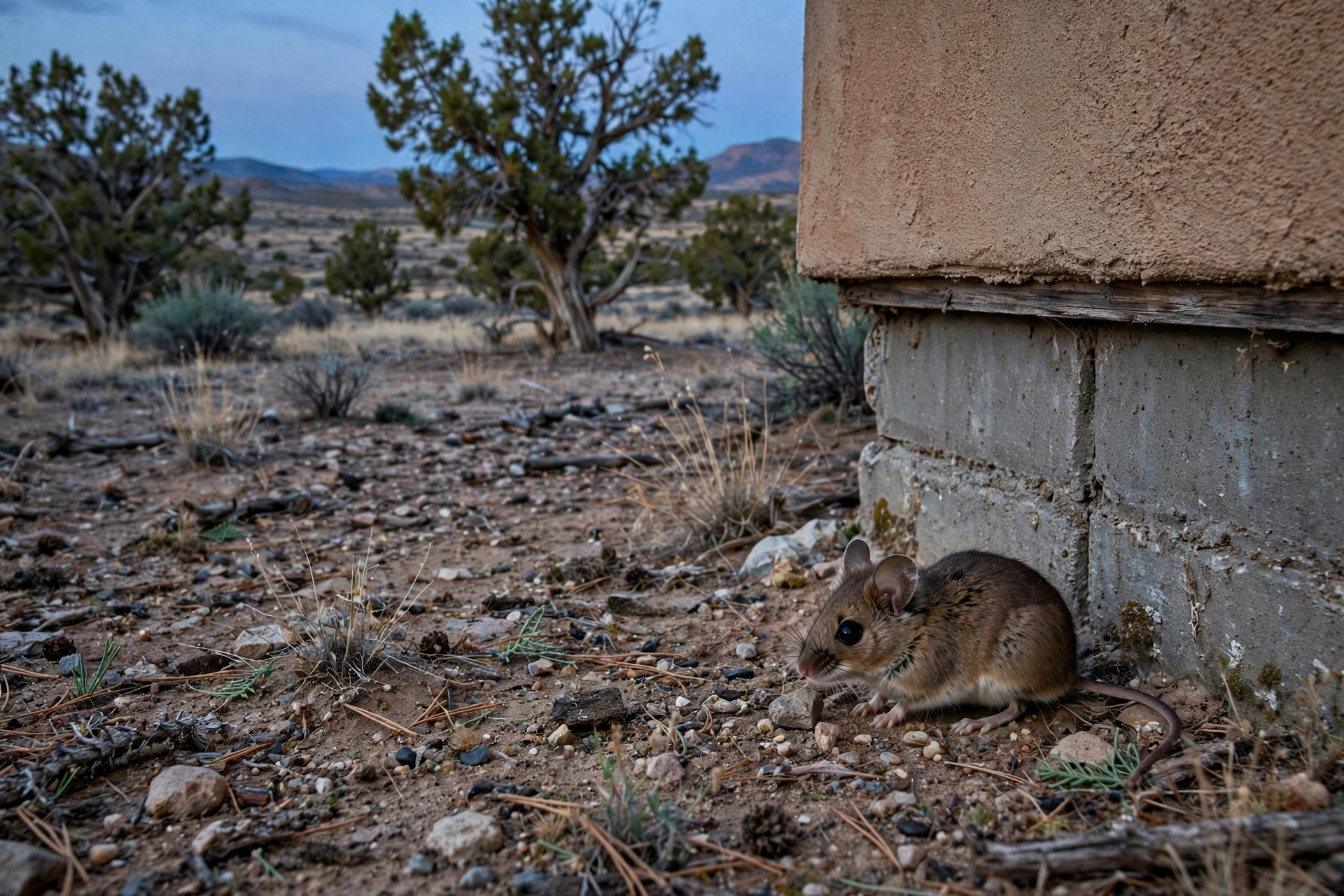
Deer mice and house mice live all around Bend — in juniper stands, rock piles, woodpiles, and open desert. All summer they do fine outside. But as nights cool into the 30s, the calculus changes: your 68-degree house with a pantry full of food is the best real estate in the county. Mice enter through gaps as small as a dime — around utility lines, under garage doors, through crawl space vents, and along the foundation.
A single pair of mice can produce dozens of offspring in a few months, and they don’t hibernate — once inside, they stay active all winter, chewing wiring, shredding insulation for nests, and contaminating food. The scratching you hear in the attic at 2 a.m. in November is the sound of a problem that started in October. Our rodent control calls in Bend spike every fall for exactly this reason.
Deer Mice and Hantavirus: Take Droppings Seriously
Central Oregon’s deer mice can carry hantavirus, which spreads through airborne particles from dried droppings, urine, and nesting materials. It’s rare but serious — so cleanup matters. Never sweep or vacuum mouse droppings dry: ventilate the area first, then spray droppings with disinfectant, let them soak, and wipe up with paper towels while wearing gloves and a mask. Then seal the entry points so you’re not cleaning up after the next family.
If you find extensive droppings in an attic or crawl space, consider professional cleanup — disturbing a large accumulation without proper precautions is the main exposure risk. OSU Extension publishes detailed guidance on safe rodent cleanup for Oregon homeowners.
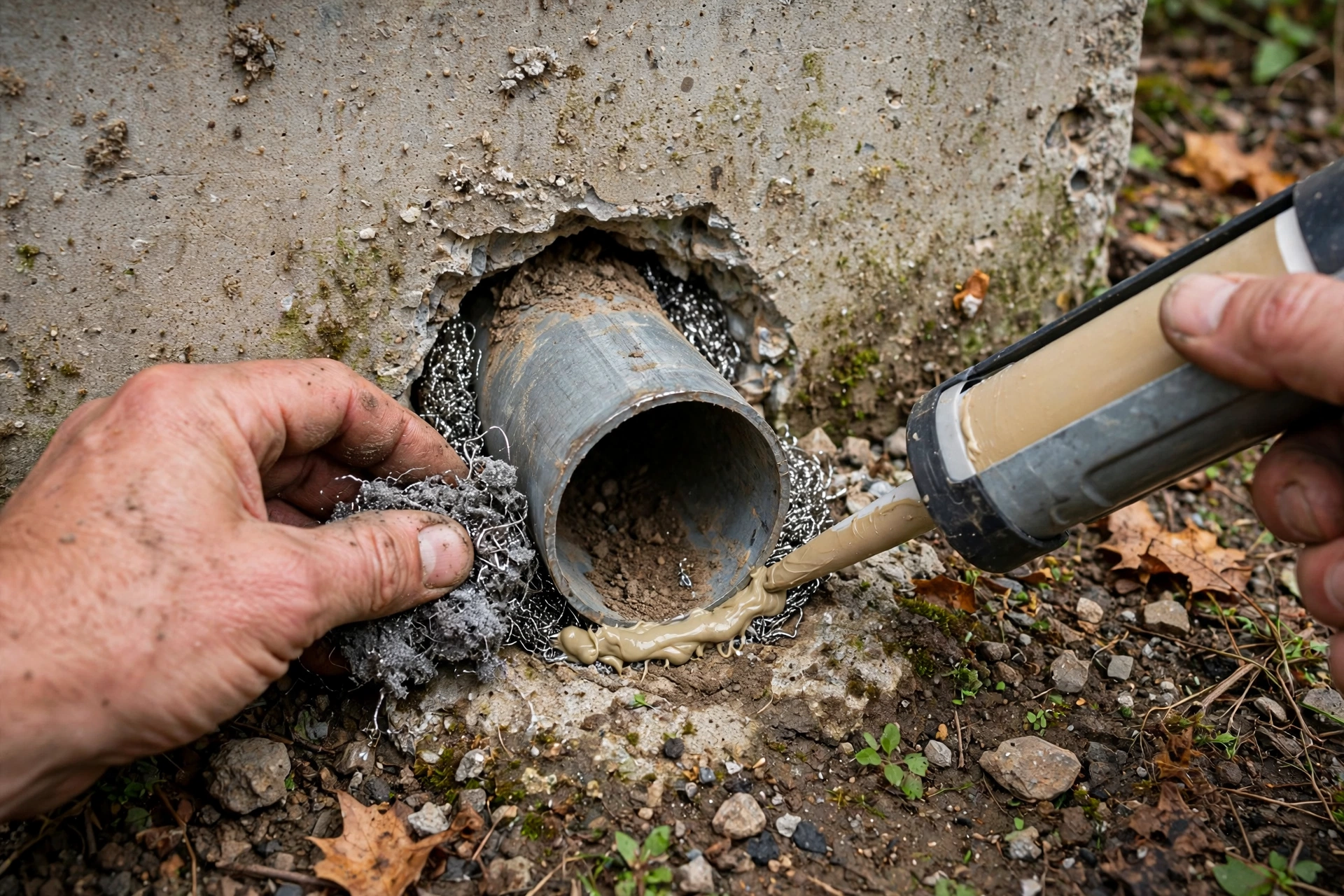
How to Mouse-Proof Your Home Before the First Freeze
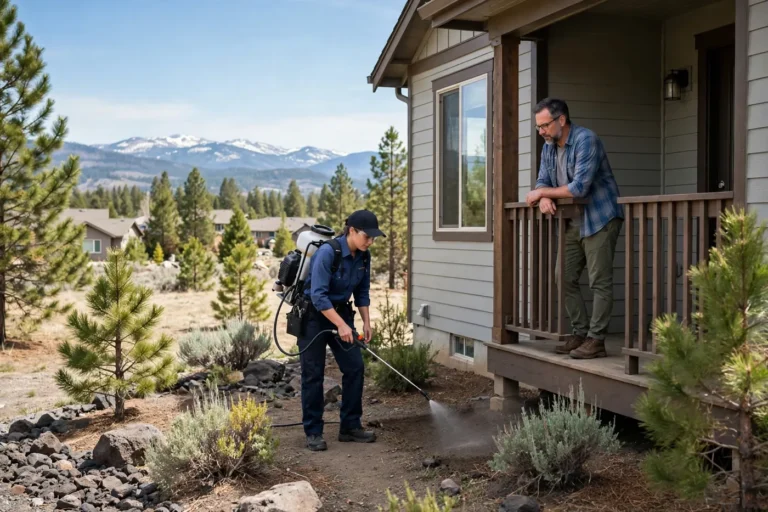
Traps catch mice. Exclusion stops them. Here’s the exclusion checklist our technicians run on every Bend home each fall:
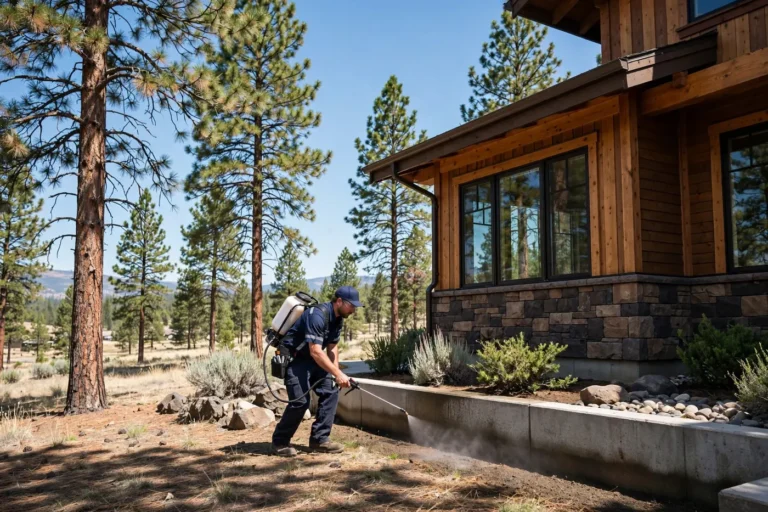
- Seal the foundation. Caulk cracks and stuff steel wool plus caulk around every pipe, wire, and vent penetration. Mice chew through foam alone — always back it with steel wool or hardware cloth.
- Fix the garage door. Worn bottom seals leave exactly the gap a mouse needs. Replace seals and add brush sweeps.
- Screen the vents. Cover crawl space, attic, and dryer vents with 1/4-inch hardware cloth — never chicken wire, which mice squeeze through.
- Check the roofline. Gaps where the roof meets the walls, uncapped chimneys, and attic vents are common high-entry points.
- Remove the welcome mat. Move firewood away from the house, trim vegetation back from siding, and store birdseed and pet food in sealed metal or hard plastic containers.
Winter Mouse Prevention Checklist
- Do a full exterior walk-around in early fall — every year, without fail.
- Keep attic and crawl space access points closed and latched.
- Don’t leave pet food out overnight; it’s a top mouse attractant.
- Store holiday decorations in sealed bins, not cardboard boxes mice can nest in.
- Set snap traps in the garage and attic as an early-warning system — check them weekly.
- If you catch mice repeatedly, the entry point is still open: call for a professional exclusion service.
Frequently Asked Questions
When do mice start coming inside in Central Oregon?
Typically October through November, as overnight lows drop consistently. But exclusion work is best done in September — once they’re in and nesting, the job gets bigger.
How small a gap can a mouse fit through?
About 1/4 inch — roughly the diameter of a dime. If a pencil fits, a mouse fits.
Are deer mice dangerous?
They can carry hantavirus, so droppings should be cleaned up carefully (ventilate, disinfect, don’t sweep dry). The virus is rare but the precautions are simple and worth taking.
Will traps alone solve a mouse problem?
Rarely. Traps reduce numbers but don’t close entry points — new mice just move in. Lasting mouse control always includes exclusion.
How much does professional rodent exclusion cost?
It depends on the home’s size and how many entry points need sealing. A fall exclusion service typically pays for itself compared to months of trapping and damage repair — see our cost guide and FAQs.
Need help with pests in Bend? High Desert Pest Solutions offers fast, honest pest control in Bend, Oregon and across Central Oregon. Call (541) 555-0123 now or request your free estimate online — we’ll identify the pest, explain your options, and fix it right the first time.