
Fleas and Ticks in the High Desert: Protecting Pets and Family
Finding fleas and ticks in Bend, Oregon isn’t just a nuisance — it’s a health risk for your pets and your family. Our high desert climate might seem too dry for these pests, but Central Oregon has its own flea and tick species that thrive here, and your dog or cat is their favorite ride into your home. At High Desert Pest Solutions, we help Bend pet owners break the flea-and-tick cycle with a combination of pet protection, yard treatment, and indoor control.
Why Fleas and Ticks Thrive in Central Oregon
Many people assume the high desert is too dry for fleas and ticks. The truth is more complicated. While our climate does suppress some species, Central Oregon hosts the Rocky Mountain wood tick and the American dog tick — both active from spring through early fall, especially in grassy areas, along trails, and in irrigated yards. Fleas, meanwhile, don’t need the outdoors at all: once a flea hitches a ride inside on your pet, your carpet, bedding, and furniture become a perfect breeding ground regardless of the weather outside.
Pets are the carriers. Dogs pick up ticks on hikes around the Deschutes River Trail, Pilot Butte, or the Badlands, and bring fleas home from dog parks and boarding facilities. Cats that roam outdoors are equally exposed. And here’s what most pet owners don’t realize: by the time you see fleas on your pet, the infestation is already established — adult fleas on the animal represent only about 5% of the total population. The other 95% (eggs, larvae, pupae) is hiding in your home.
Signs Your Pet — or Your Home — Has Fleas or Ticks

- Excessive scratching, biting, or licking — especially around the base of the tail, belly, and ears
- “Flea dirt” — tiny black specks in your pet’s fur that turn reddish-brown on a wet paper towel (that’s digested blood)
- Visible ticks — check ears, between toes, under collars, and around the groin after every hike
- Hair loss or hot spots — often a sign of flea allergy dermatitis, which some pets develop from a single bite
- Tiny jumping insects on pet bedding, rugs, or your own ankles — that’s an indoor flea population
One caution from years of tick removals: never burn a tick off or smother it with nail polish. Use fine-tipped tweezers, grasp the tick as close to the skin as possible, and pull straight out. Save the tick in a sealed bag — if symptoms develop, identification helps your doctor.
Yard Treatment Timing in the High Desert
Timing is everything with tick control in Central Oregon. Ticks emerge as temperatures warm in spring — typically April through June is peak questing season, when they’re actively climbing grass blades waiting for a host. A targeted yard treatment in late spring knocks down the population before the heavy summer hiking season, and a second application in early summer extends protection through fall.
Fleas follow a different clock: they’re a year-round indoor problem but spike in summer when warmth and humidity (from irrigation) speed up their life cycle. If your pet brings fleas inside, the yard, the pet, and the home all need treatment together — treating just one lets the cycle restart. That’s why our residential pest control plans coordinate all three.
How We Treat Fleas and Ticks
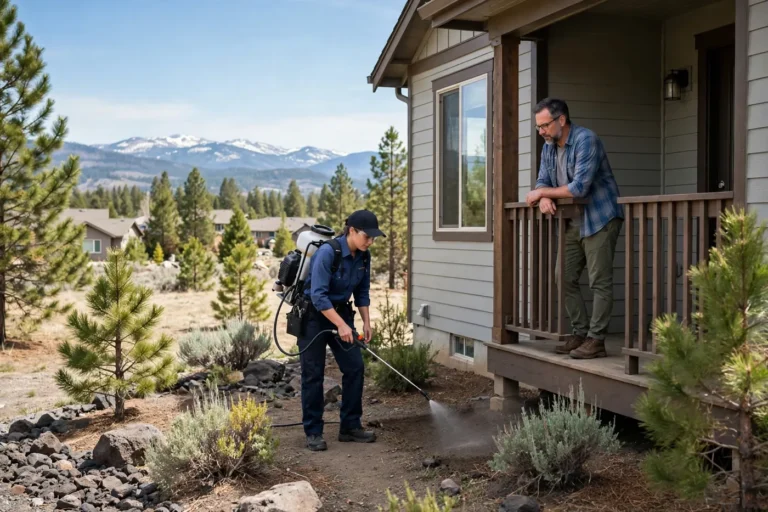
We use an integrated approach — not just a spray and a prayer. First, we inspect your yard to find tick habitat: tall grass, leaf litter, woodpiles, and shady resting areas where pets hang out. Then we apply targeted treatments to those zones (never a blanket chemical bath across your whole property). Indoors, we treat the areas where flea life stages hide — baseboards, carpet edges, pet bedding zones — with products chosen for homes with animals and children.
Critically, we also coordinate with your veterinarian’s recommendations. Professional yard and home treatment plus a vet-approved flea-and-tick preventive on your pet is the combination that actually ends infestations. Either one alone usually fails. If you’re unsure about product safety around your animals, read our guide on pesticide safety for pets and kids.
Practical Tips: Keep Fleas and Ticks Off Your Pets
- Keep your vet-prescribed flea-and-tick preventive current year-round — not just in summer
- Check your dog for ticks after every hike: ears, armpits, between toes, and under the collar
- Mow regularly and clear leaf litter where ticks wait for hosts
- Wash pet bedding weekly in hot water during an active infestation
- Vacuum carpets, rugs, and upholstery frequently — and empty the vacuum outside
- Don’t let pets sleep in your bed until an infestation is fully resolved
Frequently Asked Questions
Can my indoor-only cat get fleas?
Yes. Fleas ride in on dogs, on your clothing, or through open windows and doors. Once inside, they breed in carpet and furniture without ever needing the outdoors again. Indoor-only pets still benefit from preventive treatment — ask your vet.
What diseases do ticks carry in Central Oregon?
Rocky Mountain wood ticks can transmit Rocky Mountain spotted fever and tularemia; American dog ticks carry similar risks. Transmission usually requires the tick to be attached for many hours, which is why prompt removal after hikes matters so much.
How long does it take to eliminate a flea infestation?
Typically 2–3 months, because flea pupae are nearly indestructible and hatch in waves. This is normal — not a treatment failure. Consistent vacuuming plus follow-up treatments break the cycle as each wave emerges.
Is your yard treatment safe for my dog?
Yes. We use EPA-registered products applied at label rates, targeted to tick habitat rather than broadcast everywhere. We’ll tell you exactly when it’s safe for pets to return to treated areas — usually once the application has dried.
Should I treat the yard, the house, or just the pet?
For an active infestation: all three. The pet carries them, the house harbors 95% of the flea life cycle, and the yard re-infests the pet. Treating only one leaves the cycle intact. Our plans coordinate all three for exactly this reason.
Don’t let fleas and ticks make your pets miserable — or put your family at risk. Request a free estimate or call High Desert Pest Solutions at (541) 555-0123 for flea and tick control in Bend and throughout Redmond, Sisters, and La Pine.