
Bed Bug Signs: How to Check Your Hotel Room or Home
Bed bugs in Bend don’t care how nice your hotel is. Our town draws visitors from all over the country — skiers, festival crowds, business travelers — and bed bugs are champion hitchhikers, riding home in luggage, backpacks, and even folded jackets. The good news: if you know the early bed bug signs, you can catch an introduction before it becomes an infestation. Here’s exactly what to look for, in hotels and at home.
One important note up front: bed bug bites alone don’t confirm bed bugs. Bites look different on everyone, and plenty of skin conditions mimic them. The reliable evidence is physical — spots, skins, and the bugs themselves. Learn to spot those, and you’ll never have to guess.
The First Signs of Bed Bugs (and What People Miss)
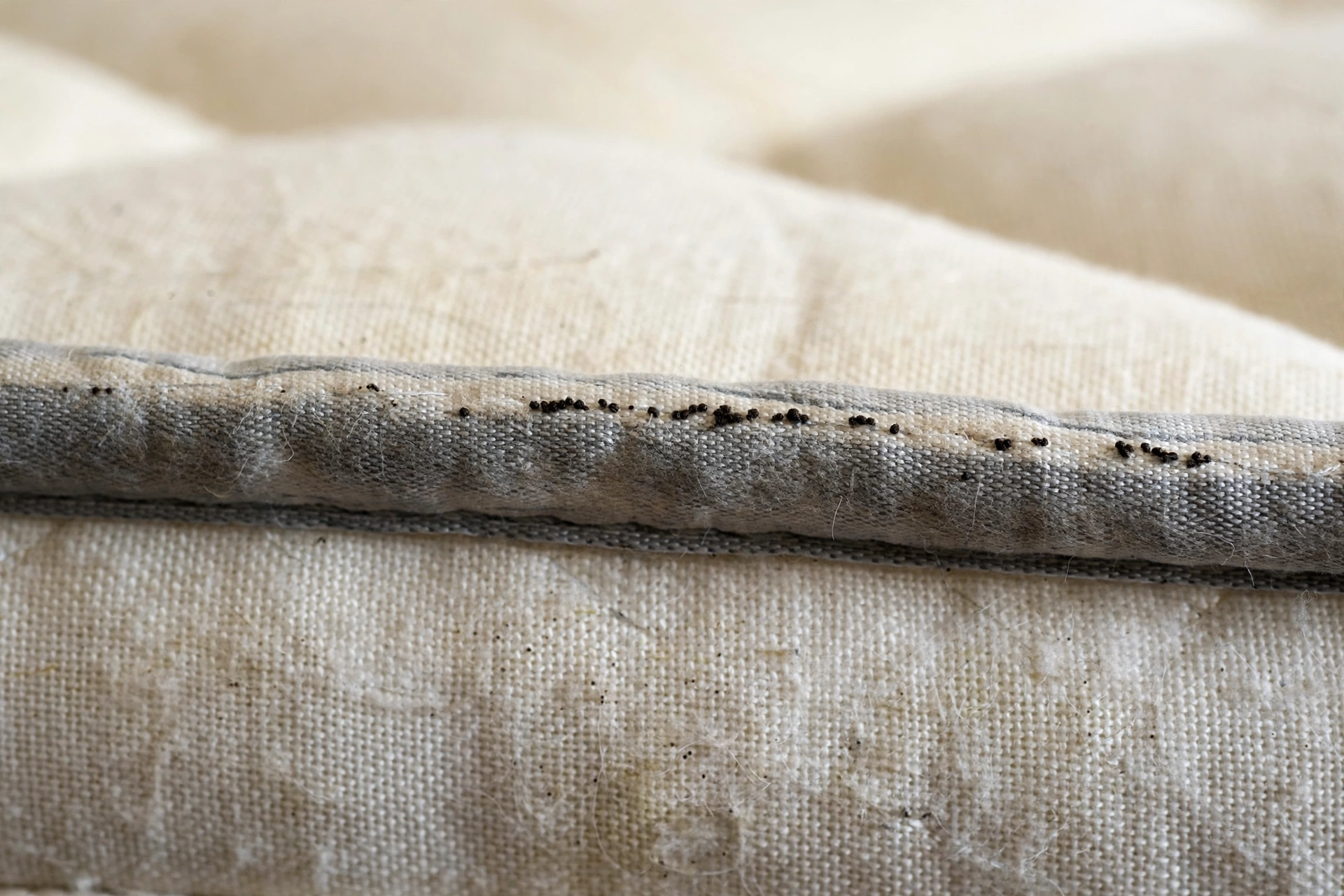
- Dark fecal spots — tiny rust-colored or black dots along mattress seams, piping, and tags. This is the single most common early sign, and it’s easy to mistake for dirt.
- Shed skins — translucent, empty bed bug “shells” in seams and crevices as nymphs grow.
- Tiny white eggs — about the size of a pinhead, tucked into stitching and cracks.
- Live bugs — adults are apple-seed-sized, reddish-brown, and flat. Check at night with a flashlight; they avoid light.
- A sweet, musty odor — only noticeable in heavier infestations, but distinctive once you’ve smelled it.
Where to look: mattress and box spring seams, behind the headboard, inside nightstand joints, along baseboards near the bed, and in upholstered furniture seams. Bed bugs stay close to where people sleep — a methodical 10-minute check of those zones finds the vast majority of early problems.
How to Check a Hotel Room in 10 Minutes
Make this a habit every trip, whether it’s a budget motel or a resort in Sunriver:
- Luggage goes in the bathroom first. Bed bugs rarely infest tile bathrooms — it’s the safest staging area while you inspect.
- Pull back the sheets and check the mattress seams and piping on all four sides, plus the mattress tag area.
- Lift the mattress and inspect the box spring, especially corners and the dust cover underneath.
- Check behind the headboard — pull it away from the wall if you can.
- Open the nightstand drawers and look at the joints and screw holes with your phone flashlight.
- Glance at upholstered chairs and the luggage rack for spots or skins.

Checking Your Own Home After a Trip
Run the same inspection at home within a day or two of returning — bed bugs you brought back will head straight for the bedroom. Wash everything from the suitcase in hot water and run it through the dryer on high heat for at least 30 minutes; heat kills all life stages. Store the empty suitcase in the garage, not the bedroom closet, and give couch seams and baseboards near the bed a quick flashlight check. Catching a handful of hitchhikers in week one is a minor nuisance; discovering them in month three is a full bed bug treatment project.
Why DIY Bed Bug Treatment Usually Makes It Worse
Here’s the mistake we see over and over: someone finds bed bugs, buys a “bug bomb” fogger, and sets it off. Total-release foggers don’t penetrate the cracks where bed bugs hide — but the repellent chemicals drive them deeper into walls and into neighboring rooms or units, spreading the infestation. Partial DIY treatments also select for resistant survivors. Effective bed bug elimination takes a combination of targeted residual products, heat treatment for heavy infestations, and follow-up inspections to confirm every life stage is gone. It’s one of the few pests where calling a professional pest control company early actually saves money.
Bed Bug Prevention Checklist
- Inspect every hotel room before unpacking — luggage stays in the bathroom until you do.
- Use mattress encasements at home; they don’t prevent bed bugs but make inspections far easier.
- Reduce bedroom clutter — fewer hiding places, faster detection.
- Be cautious with secondhand furniture; inspect seams and joints before bringing anything inside.
- Vacation rental owners: schedule between-guest inspections. Our vacation rental pest control plans include them — and if you manage a Sunriver property, pair bed bug vigilance with seasonal mosquito management for full guest-season protection. More general questions? See our FAQ hub.
Frequently Asked Questions
Can you actually see bed bugs with the naked eye?
Yes. Adults are about the size of an apple seed — reddish-brown, flat, and oval. Nymphs are smaller and paler. In practice, most people notice the signs first: dark fecal spots along mattress seams are easier to spot than the bugs themselves.
Do bed bugs spread disease?
Bed bugs are not known to transmit diseases to humans. The real harm is bites and allergic reactions, secondary skin infections from scratching, and the significant stress and sleep loss an infestation causes.
How fast do bed bugs spread?
A single mated female can lay hundreds of eggs. What starts as a few hitchhikers can become a room-wide infestation in two to three months — and in apartments or multi-unit buildings, they migrate through walls to neighboring units.
Can I get rid of bed bugs myself?
Honestly, complete DIY elimination is rare. Over-the-counter sprays kill on contact but miss the hidden majority, and foggers scatter bugs deeper into hiding. Professional heat treatment combined with targeted residuals is the reliable path — and it’s what our bed bug treatment service is built around.
I found bed bugs in my vacation rental — what now?
Take the room out of service, don’t move the mattress or furniture (that spreads them), and call a professional immediately. Document everything for your records. Our rental pest plans include rapid response and between-guest inspections to prevent exactly this scenario.
Dealing with bed bugs in Bend or anywhere in Central Oregon? High Desert Pest Solutions will identify the problem accurately and give you an honest plan to fix it — no scare tactics, no overselling. Call (541) 555-0123 or request your free estimate online today.