Why Yellowjackets Are So Aggressive in Central Oregon
It’s late August in Bend. You’re grilling on the deck, and suddenly the air is full of angry yellow-and-black insects dive-bombing your burger. If you’ve wondered why yellowjackets are so aggressive in Central Oregon every fall, there’s a real biological reason — and understanding it is the key to dealing with them safely. Here’s what’s happening with yellowjackets in Bend, Oregon, and when to handle it yourself versus calling a pro.
The Yellowjacket Life Cycle: From Tiny Nest to Big Problem
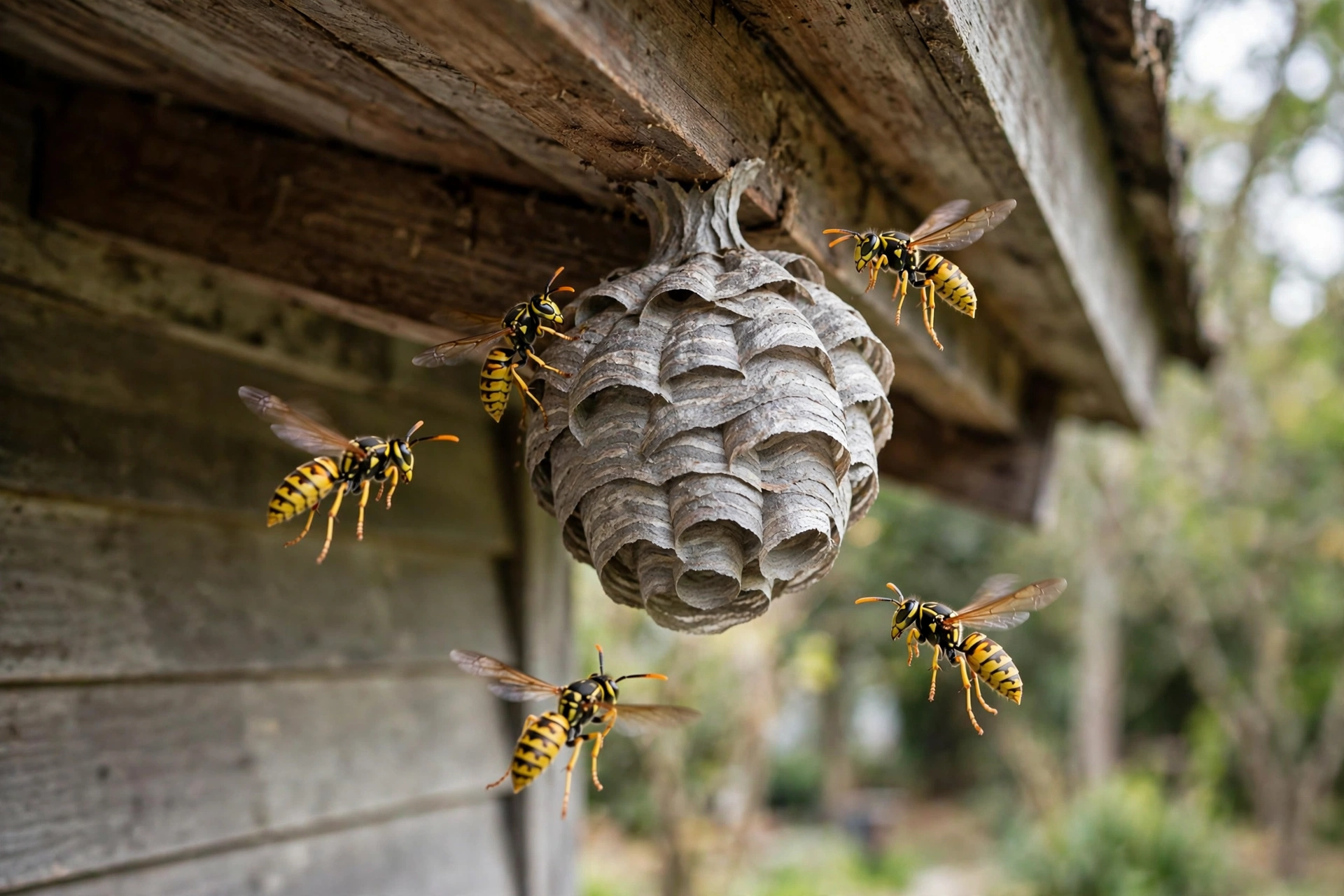
A yellowjacket colony starts in spring with a single queen building a small paper nest — maybe the size of a golf ball. Through June and July, worker numbers climb steadily. By August, that golf ball is a basketball, housing thousands of wasps. The nest you ignored in June is the emergency in September. Western yellowjackets, the dominant species here, nest in wall voids, attics, and underground — ground holes near foundations and retaining walls are classic Central Oregon nest sites.
This growth curve is why early-season action matters so much. A small visible nest in June can often be dealt with simply. The same nest in September is a defensive fortress.
Why Fall Makes Yellowjackets So Aggressive
Two things change in late summer. First, the colony’s diet shifts: all summer, workers hunt protein (insects, meat) to feed the larvae. As brood-rearing winds down in fall, the colony switches to craving sugar — your soda, your fruit, your barbecue sauce. That’s why they suddenly care about your picnic.
Second, the colony is dying. The queen stops laying, workers age, and the nest’s social order breaks down. Older, hungrier wasps with nothing to lose become hair-trigger defensive. A yellowjacket that would have ignored you in July will chase you in September. They can also sting repeatedly — unlike honeybees, they don’t lose their stinger.

Ground Nests and Wall Voids: When It’s a Professional Job
Here’s the rule our technicians live by: if you can see the whole nest, it’s small, and you can treat it at night from a safe distance — that’s a reasonable DIY job with a wasp-specific spray. Call a professional for everything else:
- Nests inside wall voids or attics — spraying the entrance traps angry wasps inside your house. This is the number-one way DIY wasp jobs go wrong.
- Ground nests — you can’t see the nest size, and disturbing it releases the entire colony at once.
- Large nests (bigger than a softball) — the defensive response scales with colony size.
- Nests near doorways, decks, or play areas — high-traffic locations leave no margin for error.
- Anyone with a sting allergy in the household — don’t gamble.
Professional wasp and hornet removal in Bend uses commercial-grade dusts and non-repellent treatments applied at night when the colony is dormant — eliminating the nest completely, including the queen, usually in a single visit.
Yellowjacket Prevention Tips for Central Oregon Homes
- Inspect eaves, sheds, and play structures in June — destroy small starter nests early.
- Keep trash cans sealed and clean grill grease traps; both are yellowjacket magnets.
- Pick up fallen fruit promptly in late summer.
- Seal gaps in siding and around vents where queens overwinter and start nests.
- Cover sweet drinks outdoors and check cans before sipping — a classic fall sting scenario.
- Don’t swat: crushing a yellowjacket releases an alarm pheromone that summons more.
Frequently Asked Questions
Why are yellowjackets worse in August and September?
Colonies reach peak size in late summer just as their diet shifts from protein to sugar and the colony begins declining. Bigger colonies plus hungrier, more defensive wasps equals peak aggression season in Central Oregon.
Can yellowjackets sting multiple times?
Yes. Unlike honeybees, yellowjackets don’t lose their stingers, so a single wasp can sting repeatedly — another reason to treat nests professionally.
How do I find a ground nest?
Watch flight patterns on a warm afternoon: workers fly in straight lines to and from the entrance hole, often near foundations, retaining walls, or landscape timbers. Mark the spot from a distance and call a pro — don’t dig into it.
Is it safe to spray a nest myself?
Only small, fully visible, accessible nests treated at night with a wasp-specific jet spray. Never spray a nest inside a wall void — you’ll drive them indoors. When in doubt, our wasp removal team handles it in one visit.
How much does professional wasp nest removal cost?
Single-nest removals are among the most affordable pest services. See our cost guide for typical ranges — most Bend nests are resolved in one appointment.
Need help with pests in Bend? High Desert Pest Solutions offers fast, honest pest control in Bend, Oregon and across Central Oregon. Call (541) 555-0123 now or request your free estimate online — we’ll identify the pest, explain your options, and fix it right the first time.