
Squirrel in the Attic? Removal and Prevention Tips
Hearing scratching and scampering above your bedroom at 6 a.m.? If you’ve got a squirrel in the attic in Bend, you’re dealing with one of Central Oregon’s most persistent home invaders. Gray squirrels are excellent climbers, relentless chewers, and — once they’ve decided your attic is a good den site — remarkably hard to discourage without the right approach. Here’s how to confirm it’s a squirrel, where they’re getting in, and how to remove them humanely and keep them out.
How to Tell It’s a Squirrel (Not a Mouse)
Before you do anything, make sure you know what you’re dealing with — squirrel and mouse problems need completely different strategies:
- Timing of the noise: squirrels are active during the day, especially early morning and late afternoon. Hearing heavy scampering at dawn? Squirrel. Light scratching at 2 a.m.? Probably mice — see our rodent control guide for that.
- Volume: squirrels are much heavier than mice. Their movement sounds like something rolling or thumping; mice sound like faint scratching.
- Entry hole size: a squirrel needs a golf-ball-sized opening or larger. Mouse holes are dime-sized.
- Droppings: squirrel droppings are larger — roughly the size of a bean — and often found near entry points. Mouse droppings are rice-sized.
- Nesting material: squirrels drag in leaves, twigs, and shredded insulation to build bulky nests; you may find nut caches stashed in corners.
Where Squirrels Get Into Central Oregon Homes
Squirrels are construction critics — they find every weak point on your roofline. The usual suspects on Bend-area homes:
- Gable and soffit vents — flimsy plastic or aluminum vents are no match for squirrel teeth.
- Roofline gaps — where the roof meets the fascia, especially on older homes where wood has softened.
- Chimneys — an uncapped chimney is an open invitation.
- Knotholes and construction gaps — squirrels enlarge small openings with surprising speed.
- Overhanging branches — anything within 8–10 feet of the roof is a launch pad. In pine-heavy neighborhoods from Sisters to southwest Bend, this is the number-one access route.

Why Fall Is Squirrel Season in Central Oregon
Come September and October, squirrels are working two jobs: caching food for winter and finding a warm, dry den site. Your insulated attic checks every box — sheltered, warm, full of nesting material, and conveniently close to the bird feeder. Juveniles dispersing from summer litters are also looking for their own territory, which is why a home that’s never had squirrel trouble can suddenly get a tenant. Once a squirrel has successfully denned in your attic, it (and its offspring) will return year after year unless the entry points are properly sealed.
Humane Removal and Exclusion That Actually Lasts
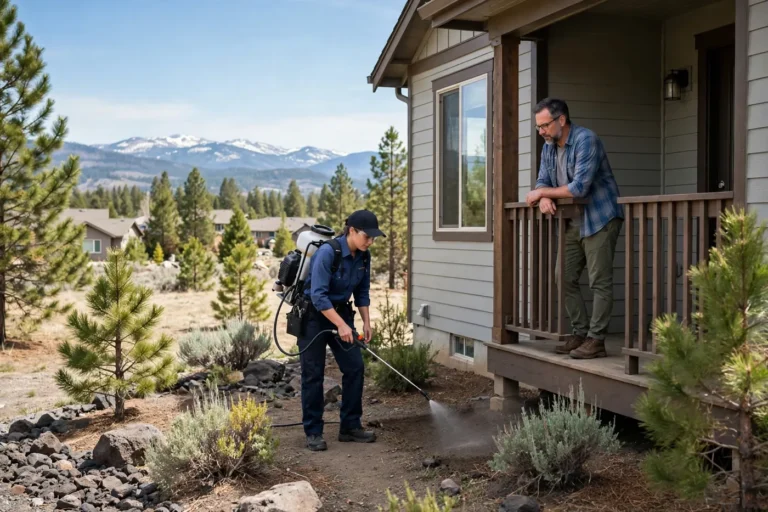
The right approach is exclusion, not just trapping. Here’s how our wildlife removal technicians handle it: first, a full roofline inspection to find every entry point (there’s rarely just one). Then we install one-way exclusion doors over the main entries — the squirrel can leave to forage but can’t get back in. Once we’re certain the attic is empty, we seal every opening with chew-proof materials: galvanized hardware cloth and metal flashing, never just caulk or foam. Finally, we clean and sanitize contaminated insulation and advise on attractant removal.
Two things to never do: don’t use poison — a poisoned squirrel dies inside your walls, creating a far worse problem, and poses secondary-poisoning risks to owls, hawks, and pets. And don’t seal entries during spring or summer without checking for babies — sealing a mother out while pups remain inside is inhumane and creates a desperate, destructive situation. Timing and inspection matter, which is why this is a job for a licensed professional.
Squirrel Prevention Checklist
- Trim all tree branches at least 8–10 feet from the roofline.
- Cap the chimney with a stainless steel chimney cap.
- Replace flimsy plastic vents with heavy-gauge metal or hardware-cloth-backed vents.
- Inspect the roofline each fall for new gaps, chew marks, or soft wood.
- Move bird feeders away from the house — spilled seed is a squirrel magnet. More wildlife questions? Check our FAQ hub.
Frequently Asked Questions
Are squirrels in the attic dangerous?
They can be. Squirrels chew constantly — including electrical wiring, which is a genuine fire risk. They also shred insulation (driving up energy bills), contaminate the attic with droppings and urine, and can carry parasites like fleas and ticks indoors.
Will the squirrel leave on its own?
Almost never. An attic is an ideal den site — warm, dry, and safe from predators. Without exclusion work, a squirrel will stay, breed, and invite its offspring back year after year.
Can I just trap and relocate the squirrel myself?
Live-trapping without sealing entry points just creates a vacancy for the next squirrel. There’s also the question of babies left behind, and Oregon wildlife regulations to consider. Professional exclusion — one-way doors plus chew-proof sealing — solves the actual problem instead of resetting it.
How do you keep squirrels out permanently?
By finding and sealing every entry point with materials they can’t chew through: galvanized hardware cloth, metal flashing, and proper vent guards. That’s the core of our wildlife removal service, and it’s backed by our satisfaction guarantee.
What if there are baby squirrels in the attic?
Timing matters. In spring and summer, we inspect for dependent young first and schedule exclusion so the family can be removed humanely together. A reputable company will never seal a mother out and leave pups to die inside — ask any company you hire how they handle this.
Dealing with squirrels in the attic in Bend or anywhere in Central Oregon? High Desert Pest Solutions will identify the problem accurately and give you an honest plan to fix it — no scare tactics, no overselling. Call (541) 555-0123 or request your free estimate online today.