How to Get Rid of Ants in Your Bend Home
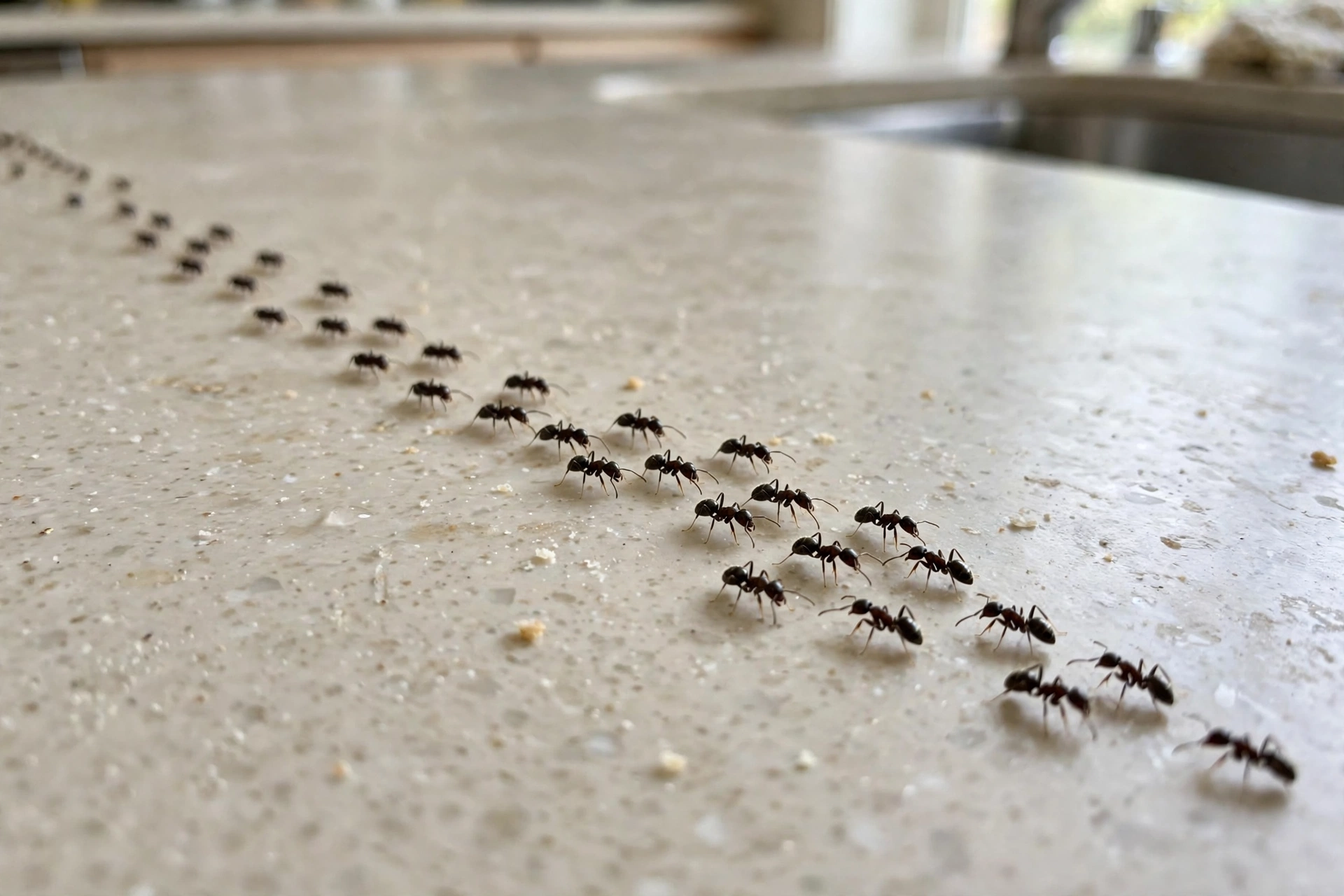
You spot a few tiny ants on the kitchen counter in the morning. By evening, there’s a marching line across the backsplash. If you’re dealing with ants in Bend, you’re not alone — odorous house ants are the most common indoor pest in Central Oregon, and they show up in Bend kitchens every single spring. The good news: you can get rid of ants for good, but only if you target the colony instead of the trail. Here’s how a local technician actually handles Bend ant control.
What Kind of Ants Are in Your Bend Home?
Not all ants respond to the same treatment, so identification comes first. In Bend, three species cause nearly all indoor problems:
- Odorous house ants — tiny (about 1/8 inch), dark brown ants that form long trails to food. Crush one and it smells like rotten coconut. They nest in wall voids, under floors, and in mulch beds, often with multiple queens — which is why they’re so hard to kill.
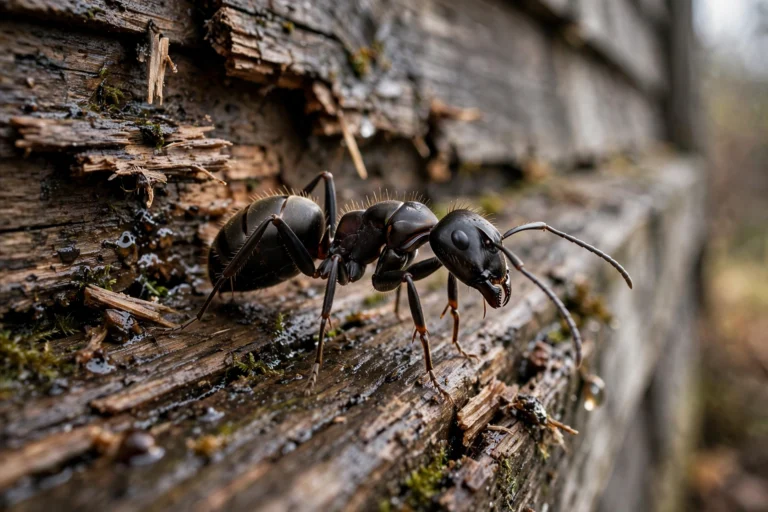
- Carpenter ants — much larger black ants, active mostly at night. They don’t eat wood, but they excavate damp or decaying wood to nest in, which can cause real structural damage over time.
- Pavement ants — small brown ants that nest under slabs, driveways, and foundations, pushing little piles of soil out of cracks.
Odorous house ants are the classic Bend kitchen invader. Carpenter ants are the serious one — if you see large black ants or sawdust-like frass, read our guide on carpenter ants vs termites to understand what you’re dealing with.
Why Spraying the Ant Trail Makes It Worse
This is the mistake almost every homeowner makes: grab the spray can, douse the visible trail, feel victorious. Two days later the ants are back — often in two or three new places. Here’s why: contact sprays kill only the foraging workers you can see, which are maybe 5% of the colony. Worse, many sprays are repellent, so the colony senses the danger and splits — a process called budding — sending queens off to start satellite nests deeper in your walls.
You turned one colony into three. Professional ant control in Bend works the opposite way: we use slow-acting baits that foragers carry back and share with the queens and brood, collapsing the entire colony from the inside.
How to Get Rid of Ants for Good
Here’s the process that actually eliminates an ant infestation in a Bend home:
- Find the food source. Ants follow scent trails to sugar, grease, and protein. Clean counters, seal pantry goods in hard containers, fix the leaky pipe under the sink, and take out trash nightly during an active infestation.
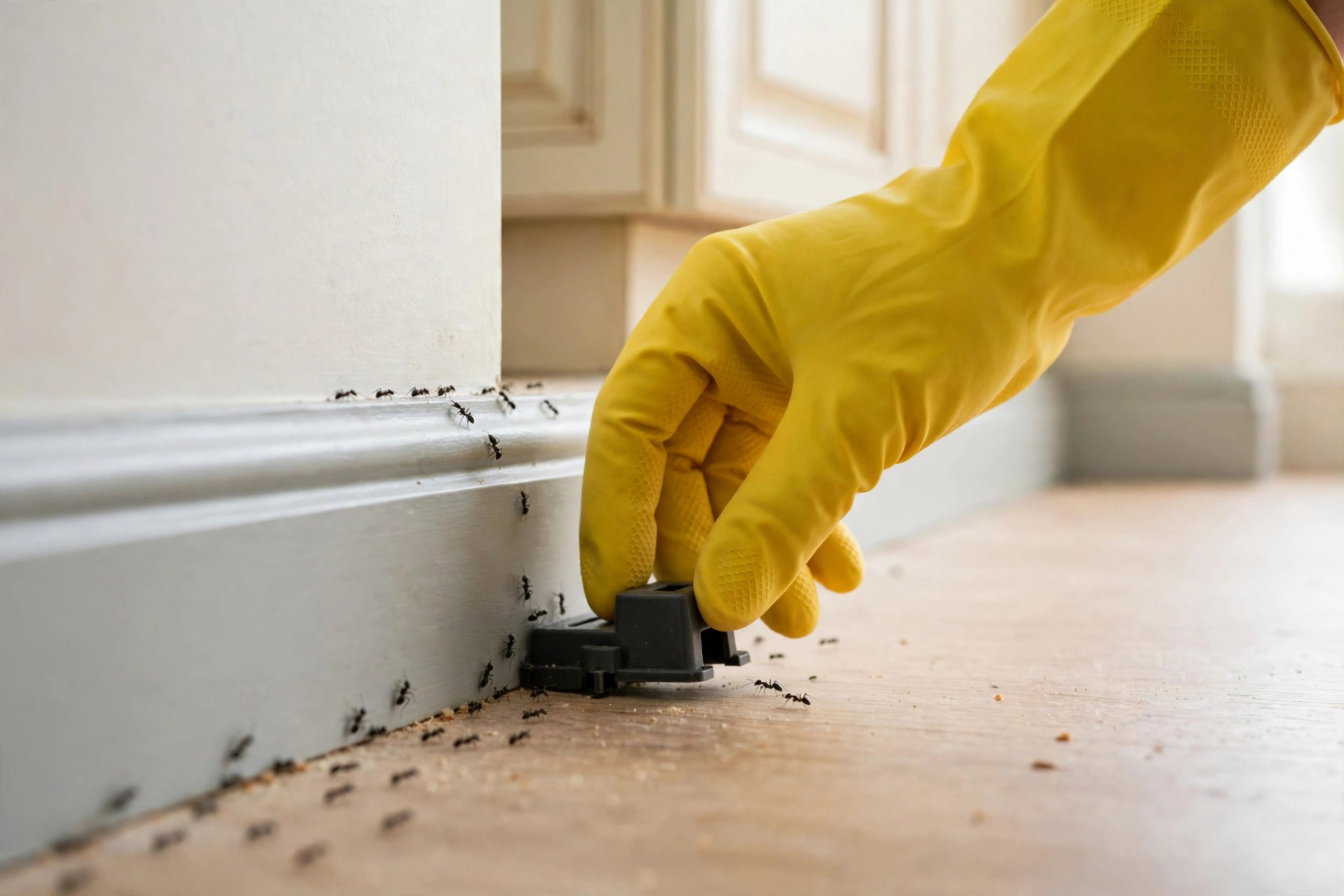
- Bait, don’t spray. Place slow-acting ant bait stations along the trail (not across it — let them feed). It takes 1–2 weeks for the bait to circulate through the colony. Resist the urge to spray alongside the bait.
- Eliminate the nest. If baiting doesn’t resolve it within a couple of weeks, the nest may be inside a wall void or under the foundation — that’s when a licensed technician’s non-repellent treatments and dust applications earn their keep.
- Seal entry points. Caulk gaps around windows, doors, and where pipes enter the house. Trim shrubs and tree limbs touching the siding — they’re ant highways.
Ant Prevention Tips for Bend Homeowners
- Wipe up crumbs and spills the same day — a single spill can feed a colony for weeks.
- Store sugar, cereal, and pet food in sealed glass or hard plastic containers.
- Fix moisture problems: leaky faucets, damp crawl spaces, and poor drainage attract ants.
- Keep firewood and mulch away from the foundation; both harbor nesting ants.
- Schedule a spring exterior perimeter treatment before ant season peaks.
Frequently Asked Questions
How long does it take to get rid of ants?
With proper baiting, most odorous house ant colonies collapse within 1–3 weeks. Carpenter ant jobs can take longer because the nest is often inside structural wood. If ants persist beyond that, the colony likely has multiple queens or satellite nests — time to call a professional.
Why do ants keep coming back every spring in Bend?
Central Oregon’s dry climate drives ants indoors seeking moisture and food as temperatures rise. Colonies that survived winter in wall voids or under slabs become active again. A spring perimeter treatment breaks the cycle — see our pest control cost guide for typical pricing.
Are ant baits safe around kids and pets?
When used as labeled, bait stations are low-risk because the bait is enclosed. Keep stations where pets can’t chew them, and always follow label directions.
What’s the difference between odorous house ants and carpenter ants?
Size and damage. Odorous house ants are tiny and a nuisance; carpenter ants are large and excavate wood, causing structural damage. Our carpenter ant vs termite guide explains how to tell them apart.
Should I just call a professional instead of DIY?
DIY baiting works for simple odorous house ant trails. Call a pro if you see large black ants (possible carpenter ants), if baiting fails after two weeks, or if ants keep returning every year — that usually means the nest is inside the structure.
Need help with pests in Bend? High Desert Pest Solutions offers fast, honest pest control in Bend, Oregon and across Central Oregon. Call (541) 555-0123 now or request your free estimate online — we’ll identify the pest, explain your options, and fix it right the first time.